What is the Marine Protection, Inquiry, and Sanctuaries Act?
How does EPA implement the MPRSA?
Why is regulating ocean dumping important? How does EPA aid protect the sea?
Besides EPA, what are other federal agencies' roles with respect to ocean dumping?
What materials are dumped into the ocean today?
What materials cannot exist dumped into the ocean?
Tin wastes exist incinerated at ocean?
How have ocean protections improved since enactment of the 1972 MPRSA?
Where can I learn more near EPA's Ocean Dumping Management Program?
What was dumped into the bounding main earlier 1972?
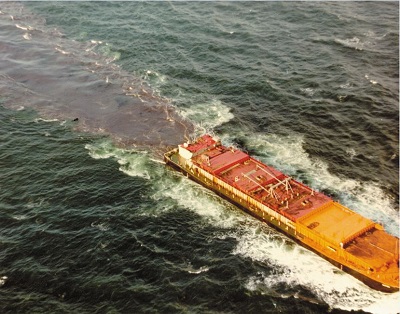
In the past, communities effectually the globe used the bounding main for waste disposal, including the disposal of chemical and industrial wastes, radioactive wastes, trash, munitions, sewage sludge, and contaminated dredged material. Little attention was given to the negative impacts of waste disposal on the marine environs. Even less attention was focused on opportunities to recycle or reuse such materials. Wastes were frequently dumped in coastal and ocean waters based on the assumption that marine waters had an unlimited capacity to mix and disperse wastes.
Although no complete records exist of the volumes and types of materials disposed in bounding main waters in the United States prior to 1972, several reports betoken a vast magnitude of historic body of water dumping:
In 1968, the National University of Sciences estimated almanac volumes of body of water dumping by vessel or pipes:
100 meg tons of petroleum products;
ii to four million tons of acid chemical wastes from pulp mills;
more ane million tons of heavy metals in industrial wastes; and
more than 100,000 tons of organic chemic wastes.
A 1970 Report to the President from the Council on Environmental Quality on ocean dumping described that in 1968 the following were dumped in the body of water in the United states of america:
38 meg tons of dredged material (34 percent of which was polluted),
four.v million tons of industrial wastes,
4.5 one thousand thousand tons of sewage sludge (significantly contaminated with heavy metals), and
0.v million tons of construction and demolition debris.
EPA records indicate that more than than 55,000 containers of radioactive wastes were dumped at three ocean sites in the Pacific Body of water betwixt 1946 and 1970. Nigh 34,000 containers of radioactive wastes were dumped at iii body of water sites off the East Declension of the U.s. from 1951 to 1962.
Following decades of uncontrolled dumping, some areas of the ocean became demonstrably contaminated with loftier concentrations of harmful pollutants including heavy metals, inorganic nutrients, and chlorinated petrochemicals. The uncontrolled body of water dumping caused severe depletion of oxygen levels in some ocean waters. In the New York Bight (sea waters off the oral cavity of the Hudson River), where New York Metropolis dumped sewage sludge and other materials, oxygen concentrations in waters nearly the seafloor declined significantly between 1949 and 1969.
What is the Marine Protection, Inquiry and Sanctuaries Act?
In Oct 1972, Congress enacted the Marine Protection, Research and Sanctuaries Act (MPRSA), sometimes referred to as the Ocean Dumping Act, declaring that it is the policy of the U.s.a. to regulate the dumping of all materials which would adversely affect human health, welfare or amenities, or the marine environs, ecological systems or economic potentialities.
The MPRSA implements the requirements of the Convention on the Prevention of Marine Pollution by Dumping of Wastes and Other Affair of 1972, known equally the London Convention. The London Convention is one of the kickoff international agreements for the protection of the marine environment from human activities.
Championship I of the MPRSA contains the permitting and enforcement provisions for regulating ocean dumping.
Title Ii of the MPRSA authorizes marine research.
The Marine Protection, Research and Sanctuaries Human action (PDF) (23 pp, 232 G, About PDF)
How does EPA implement the MPRSA?
Nether the MPRSA, EPA is responsible for establishing criteria for reviewing and evaluating permit applications. EPA is responsible for issuing bounding main dumping permits for materials other than dredged material. In the example of dredged material, the U.S. Army Corps of Engineers (USACE) is responsible for issuing ocean dumping permits, using EPA'south environmental criteria. Permits for bounding main dumping of dredged material are subject area to EPA review and written concurrence. EPA is too responsible for designating and managing ocean disposal sites for all types of materials.
EPA and USACE together develop site management and monitoring plans (SMMPs) for each designated ocean dredged textile disposal site. EPA'south Body of water Dumping Management Plan, often in coordination with USACE, conducts oceanographic surveys at these sea disposal sites to evaluate ecology atmospheric condition at the site and to determine what direction actions may be needed.
EPA's body of water dumping regulations are published at 40 Code of Federal Regulations (CFR) 220-229 , and include the criteria and procedures for ocean dumping permits and for the designation and management of ocean disposal sites nether the MPRSA. In addition, USACE has published regulations nether various provisions of 33 CFR 320, 322, 324, 325, 329, 331, and 335-337.
Why is regulating ocean dumping important? How does EPA help protect the bounding main?
Unregulated disposal of wastes and other materials into the sea degrades marine and natural resource and poses human wellness risks. For almost 50 years, EPA'southward Bounding main Dumping Management Program has stopped many harmful materials from being bounding main dumped, worked to limit ocean dumping generally, and worked to prevent adverse impacts to homo health, the marine environment, and other legitimate uses of the ocean (due east.g., navigation, fishing) from pollution acquired by ocean dumping. Larn more than about how EPA protects the oceans from dumping in the United States on the Protecting Our Oceans from Pollution Web page.
Likewise EPA, what are other federal agencies' roles with respect to ocean dumping?
Four federal agencies accept responsibilities nether the MPRSA: EPA, USACE, the National Oceanic and Atmospheric Administration (NOAA) and the U.South. Coast Baby-sit (USCG).
EPA has primary authority for regulating ocean disposal of all materials except dredged materials.
USACE and EPA share responsibility for the regulation of dredged cloth disposal in ocean.
USCG maintains surveillance of ocean dumping.
Nether Title Ii of the MPRSA, NOAA is responsible for some long-range research on the furnishings of human-induced changes to the marine environment.
In addition, EPA's Ocean Dumping Management Plan coordinates with partners at the international, federal, state and local levels, and through interagency groups, including National and Regional Dredging Teams, on sea dumping, dredged material direction, pollution prevention and marine protection activities.
What materials are dumped into the ocean today?
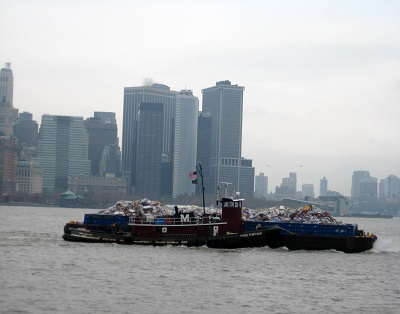
Today, the vast majority of material disposed in the sea is uncontaminated sediment (dredged material) removed from our nation's waterways to back up a network of littoral ports and harbors for commercial, transportation, national defence and recreational purposes. Other materials tending in the ocean include man remains for burial at sea, vessels, human-fabricated ice piers in Antarctica, and fish wastes. To come across locations of ocean disposal sites, ocean disposed vessels, marine mammal carcass disposals, and materials tending under an MPRSA emergency permit, please visit our Sea Disposal Map.
What materials cannot be dumped in the ocean?
The MPRSA and EPA's ocean dumping regulations prohibit body of water dumping of sure materials, such as:
loftier-level radioactive wastes;
radiological, chemic and biological warfare agents;
persistent inert synthetic or natural materials which may bladder or remain in suspension in the ocean in such a manner that they may interfere materially with fishing navigation or other legitimate uses of the ocean;
materials insufficiently described to permit application of the environmental impact criteria of xl CFR 227 subpart B;
sewage sludge;
medical wastes (isolation wastes, infectious agents, human blood and claret products, pathological wastes, sharps, trunk parts, contaminated bedding, surgical wastes and potentially contaminated laboratory wastes, dialysis wastes);
industrial wastes, specifically liquid, solid, or semi-solid wastes from a manufacturing or processing plant (except on an emergency basis); and
materials containing the following constituents in greater than trace amounts (except on an emergency basis):
Organohalogen compounds.
Mercury and mercury compounds.
Cadmium and cadmium compounds.
Oil of any kind or in whatever form.
Known carcinogens, mutagens, or teratogens.
Can wastes exist incinerated at sea?
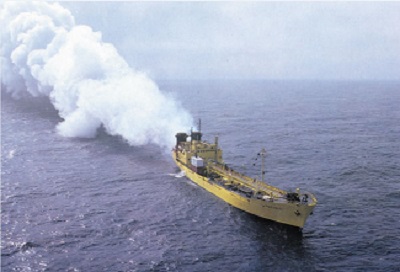
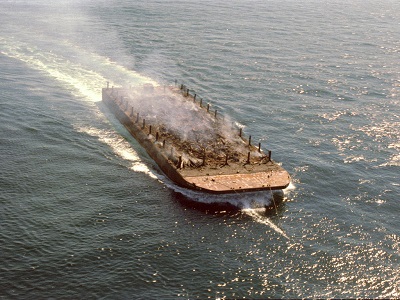
Incineration at sea is considered to be bounding main dumping because the emissions from the stack volition deposit into the surrounding bounding main waters. The Bounding main Dumping Ban Human action of 1988 banned the dumping of industrial wastes, such as those previously permitted for incineration at sea. In the 1970s and 1980s, several types of liquid organic wastes, including herbicide orange and polychlorinated biphenyls (PCBs), were incinerated at sea using shipboard incinerators. These incineration at sea activities were conducted under MPRSA permits issued by EPA. In 1985, EPA proposed specific regulations to better develop and manage incineration at ocean under MPRSA permits, only the regulations were never finalized and the incineration-at-sea programme was discontinued in 1988.
Internationally, incineration at sea is also regulated under the London Convention and London Protocol, which are ocean dumping treaties. The Usa is a Contracting Party to the London Convention. The United States has signed the London Protocol, which is intended to modernize and eventually supervene upon the London Convention; yet, the Senate has not ratified the treaty.
Under the London Convention, incineration at sea of industrial waste and sewage sludge is prohibited. The London Convention defines "incineration at sea" as the deliberate combustion of wastes and other matter on marine incineration facilities for the purpose of their thermal destruction. Combustion associated with activities incidental to the normal operation of vessels, platforms and other manmade structures is excluded from the scope of this definition. Marine incineration facility ways a vessel, platform, or other manmade construction operating for the purpose of incineration at body of water.
Under the London Protocol, incineration at ocean and the export of wastes and other materials for incineration at ocean is prohibited. The London Protocol defines "incineration at sea" as the combustion on board a vessel, platform or other man-made structure at sea of wastes or other thing for the purpose of their deliberate disposal past thermal destruction. The prohibited incineration at sea does not include the incineration of wastes or other matter on board a vessel, platform, or other man-fabricated construction at sea if such wastes or other material were generated during the normal performance of that vessel, platform, or other manmade structure at sea.
How have ocean protections improved since enactment of the 1972 MPRSA?
The passage of the MPRSA in 1972 marked a major milestone in the protection of the marine surround. Today, the Us is at the forefront of protecting coastal and sea waters from adverse impacts due to ocean dumping. The bounding main is no longer considered an appropriate disposal location for nigh wastes. Body of water dumping of certain harmful wastes is banned.
The Ocean Dumping Ban Act of 1988 amended the MPRSA and at present prohibits the body of water dumping of municipal sewage sludge and industrial wastes, such as wastes from plastics and pharmaceutical manufacturing plants and from petrochemical refineries.
The 1988 amendment also banned the body of water disposal of "medical waste material."
Other ocean dumping practices, such every bit wood burning at sea and the disposal of construction and demolition debris, have stopped as a matter of environmentally sound practice.
Those few materials that are ocean dumped are carefully evaluated to ensure that they will non pose a danger to human being health or the environment and that at that place are no ameliorate alternatives for their reuse or disposal. The Water Resource Development Act of 1992 amended the MPRSA and now requires that ocean dumping permits, including for ocean disposal of dredged material, conform to long-term management plans to ensure that permitted activities are consistent with expected uses of designated ocean disposal sites. While many challenges remain to protecting and managing our coastal and ocean resources, including historic contamination and continuous degradation from land-based sources, nosotros can be proud of the bully strides we have made under the MPRSA.
To learn more than, please visit our Bounding main Dumping Timeline.
Where tin I learn more than about EPA'southward Sea Dumping Management Program?
To learn more about the EPA's Ocean Dumping Management Program, including MPRSA (bounding main dumping) permits, ocean disposal sites and international connections, please return to our Ocean Dumping domicile page.



0 Response to "Did Trump Sign Legislation To Clean Up Ocean Trash"
Post a Comment